
I have always loved running. The escape into the outdoors, the freedom to postpone decisions, and the challenge to my muscles and lungs all help me calm my body, regulate my emotions, and focus my mind. But running has been harder over the last few years, as I’ve gotten a little older (or, well, we can say, “as I’ve gained experience”). In trying to not lose this important tool, I’ve shifted my approach to running: I no longer push my speed and distance on every run, which was leading to frequent injuries. Instead, I’ve been challenging myself to slow down.
Another area I’ve been challenging myself to slow down is in my participatory research work. Much like my early days of running, the initial phase of participatory work often feels easy and joyful. There is a rush of adrenaline in the first couple of gatherings—like running a single mile over smooth ground in beautiful weather. Everyone is energized, the vision is clear, and the pace feels effortless.
But just as my body begins to experience strain as the miles add up, groups begin to feel the strain as the work gets deeper. When we move past those early days, we hit the uphill climbs of complex logistics, differing perspectives, and the weight of the stories and the trauma we carry.
In running, I’ve learned that if I haven’t invested in stretching, strength training, and recovery, this strain leads to injury. In participatory research, the equivalent of that investment is the strength of our relationships. If we haven’t built a foundation of strong, flexible relationships rooted in trust, a disagreement can sideline our work.
The Community Action Hub is a project at ICH where people with lived experience of homelessness conduct research on what works to end homelessness. Over the last year and a half, I’ve been lucky enough to work with this group of wise, resilient, compassionate people as we learn from one another, build a group rooted in trust and equitable decision-making, and anchored by our prioritizing of one another’s health and wellbeing.
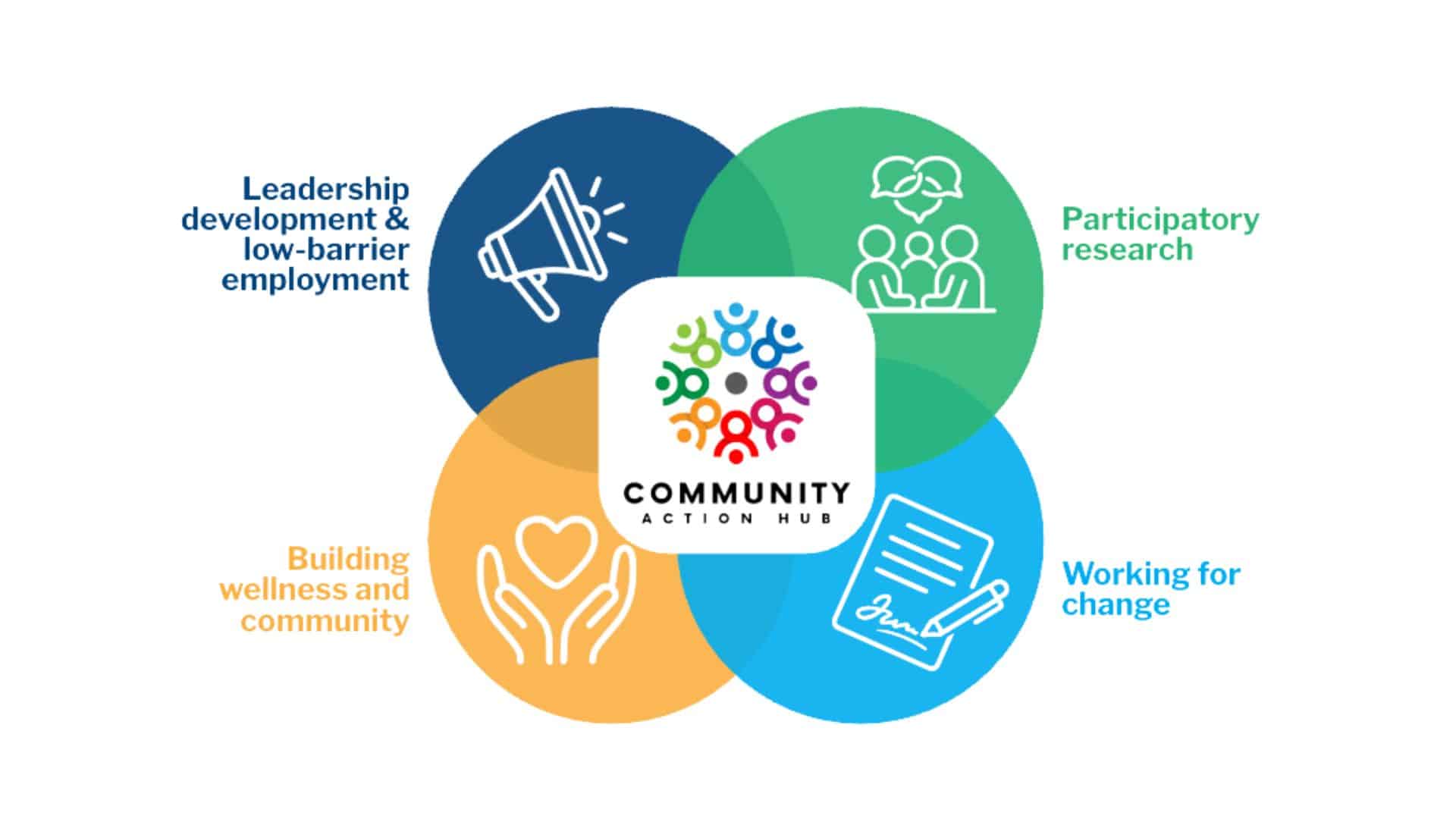
At the CAH, we prioritize both the health of our relationships and our individual wellness. We’ve realized that investing in these things isn’t “extra” work: it is the work. It’s the injury prevention that allows us to survive the inevitable strain of the long distance.
This work is difficult and heavy. In order to stay in it, we have to slow down enough to check in on one another, to navigate conflict with care, and to ensure our pace is sustainable. When we work this way, resisting cultural pressures to produce quickly, it’s no longer about how fast we can hit the finish line, but how well we can sustain practices that build our resilience as we build knowledge together. Ultimately, with participatory work, just like with running, when we go slow, we wind up stronger and able to work together for the long haul.