
Nationwide, there is a shortage of qualified Behavioral Health (BH) professionals to meet increasing levels of need (1). In Massachusetts, this shortage is particularly pronounced, as there is a higher prevalence of behavioral health conditions compared to the national average, and an insufficient workforce to meet this demand (2, 3). Key challenges for the BH workforce include a lack of compensation and benefits, high workload and burnout, and fewer opportunities for career development (4, 5, 6). This strain is particularly present in healthcare systems that provide care to underserved populations, such as community health centers (CHCs).
The Mass League Behavioral Health Workforce Initiative (BHWI)
To meet this challenge, in 2022 the Massachusetts League of Community Health Centers (Mass League) launched the Behavioral Health Workforce Initiative (BHWI) at CHCs across the state, funded by Mass General Brigham. The BHWI initiative included three workforce recruitment and retention programs designed to increase behavioral health access in Black, Indigenous, and People of Color (BIPOC) communities in underserved Massachusetts communities. The three programs included: 1) the Behavioral Health Workforce Incentive Program (BHWIP), which provided salary supplements to behavioral health providers, in addition to continuing education opportunities, 2) the Care Team Special Projects Program, which provided support for unique provider-led projects, and 3) the CHC Loan Repayment Incentive Program, which distributed loan repayment support.
From 2022-2025, Mass League partnered with ICH to support a three-year evaluation of the BHWI. The evaluation synthesized three data sources, including CHC workforce demographic and retention data, participant surveys administered at multiple timepoints, and exit interviews with participants who left the programs during the evaluation period.
Key outcomes from the BHWI evaluation
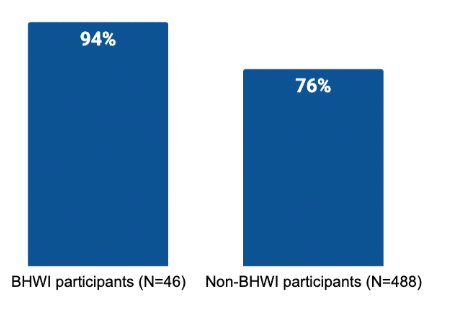
- ICH’s analysis of CHC data showed that BHWI participants had significantly higher retention over the evaluation period compared to non-BHWI providers (94% vs 76%, respectively, see figure below).
Figure 1. BH Workforce retention at participating CHCs, 2022-2025
- Throughout the evaluation period, survey participants reported high satisfaction with all 3 programs of the BHWI, and reported the program as a key factor in their decision to remain at the CHC.
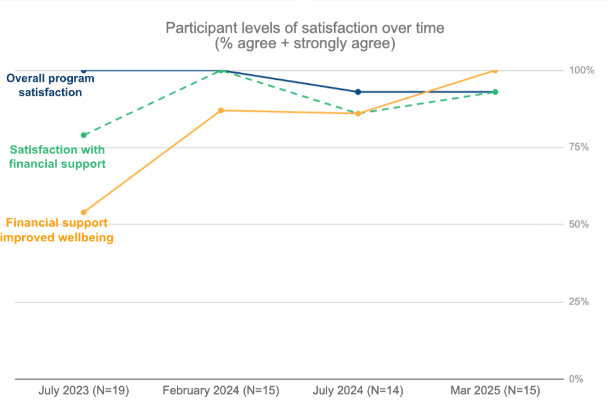
- Satisfaction with the Salary Supplement program was particularly high, and increased over the evaluation period (see figure below).
Figure 2. Participant satisfaction with the Salary Supplement program over time
- Participants shared that the financial support improved their wellbeing by reducing overall financial stress, helping them avoid taking on a second job, paying off loans and bills, increasing savings, and meeting personal financial goals. For example, participants shared:
“The financial support of BHWIP means I don’t have to stress about finances, and I can dedicate my time and energy into the valuable work done here.“
“I did not have to compromise on personal goals (buy a home, start a family) in order to continue working at a FQHC.”
- Across all programs, participants identified ongoing challenges related to workload, staffing capacity, and leadership and organizational decision-making, which can stem from systemic operational pressures on CHCs such as high levels of patient need and insufficient funding. However, participants overwhelmingly recommended ongoing/increased support for this type of workforce program, in particular for salary supplements.
The path forward
The findings from the BHWI evaluation demonstrate how providing support with compensation and professional development can contribute to BH workforce retention, particularly in historically underserved areas. Although this initial evaluation had a small sample size, and was not able to track long-term data past the program’s end, the results are promising, particularly for the Salary Supplement initiative. The 2022-2025 period represents a successful pilot program and proof of concept, which provides support for ongoing funding in this area, although there is a need to understand more about long-term retention, career trajectories, and other outcomes. Considering the enduring shortage of behavioral health workers, Massachusetts policymakers, healthcare leaders, and other stakeholders could learn from this model when considering ways to support workforce retention and development. The BHWI model presents an opportunity for continuing to stabilize, strengthen, and grow the CHC BH talent pipeline in Massachusetts.
Works cited:
- HRSA National Center for Health Workforce Analysis. State of the Behavioral Health Workforce, 2025. https://bhw.hrsa.gov/sites/default/files/bureau-health-workforce/data-research/Behavioral-Health-Workforce-Brief-2025.pdf.
- Massachusetts Health Policy Commission (HPC). Health Care Workforce Trends and Challenges in the Era of COVID-19: Current Outlook and Policy Considerations for Massachusetts, 2023. https://www.mass.gov/doc/health-care-workforce-trends-and-challenges-in-the-era-of-covid-19/download
- Massachusetts Health Policy Commission (HPC). Behavioral Health Workforce Center Overview & HPC Workforce Research, 2025. https://www.mass.gov/doc/behavioral-health-workforce-center-overview-hpc-workforce-research-ma-health-policy-commission/download
- Substance Abuse and Mental Health Services Administration (SAMHSA). Expanding Peer Support and Supporting the Peer Workforce in Mental Health, 2024 https://store.samhsa.gov/sites/default/files/issue-brief-expanding-peer-support-pep24-01-004.pdf
- National Association of Social Workers (NASW). New Social Worker and Seasoned Pro: Fighting Burnout. https://www.socialworkers.org/Careers/Fighting-Burnout
- American Psychological Association (APA), Workers appreciate and seek mental health support in the workplace, 2022. https://www.apa.org/pubs/reports/work-well-being/2022-mental-health-support