
Background
There is an over-representation of Black and Latinx individuals experiencing substance use disorder (SUD) among the homeless population in Boston, MA. In addition, there has been an increase in overdose deaths in recent years, particularly among Black individuals. Low threshold housing with comprehensive services have emerged as an effective and evidence-based strategy to support individuals living with substance use disorders who are experiencing unsheltered homelessness. As a response to the increasing number of individuals who experience both unsheltered homelessness and SUD, in January 2022, the city of Boston established six low-threshold sites (LTS). The Boston Pathways project aimed to evaluate this policy with a focus on racial equity.
Objective
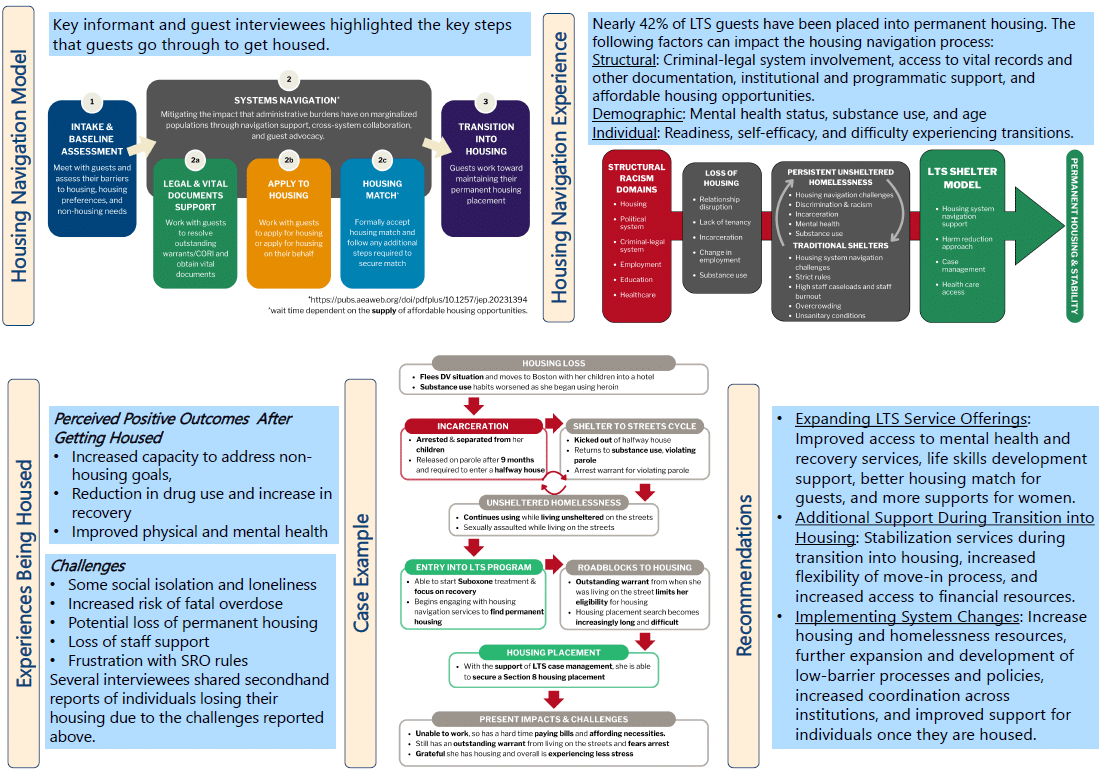
The Boston Public Health Commission (BPHC) partnered with the Institute for Community Health (ICH) to conduct an equitability evaluation of the LTS. Given the LTS’s emphasis on getting guests housed, it was critical for the evaluation to identify factors that impact housing placement and retention, and to explore the experiences of guests who have been placed in permanent housing.
Methods
Data Collection
Data Management and Analysis
Results
Conclusion
Despite changes and federal policy landscapes, low-threshold Housing First approaches to unsheltered homelessness and the overdose crisis remains a powerful and equitable tool that policy makers can utilize. While transitioning into housing may be challenging for some individuals, it can have myriad benefits even for those with chronic histories of unsheltered homelessness.