

Background
Recognizing the high prevalence of opioid use disorder (OUD) among incarcerated, homeless individuals and their elevated risk for fatal overdose upon release, Boston Health Care for the Homeless Program (BHCHP) collaborated with two county jails to provide medication for opioid use disorder (MOUD) and related care to people exiting incarceration through their reentry program (RISE). They partnered with the Institute for Community Health (ICH) as their evaluator to assess program outcomes.
Methods
Data Collection
Data Management and Analysis
Results
Discussion
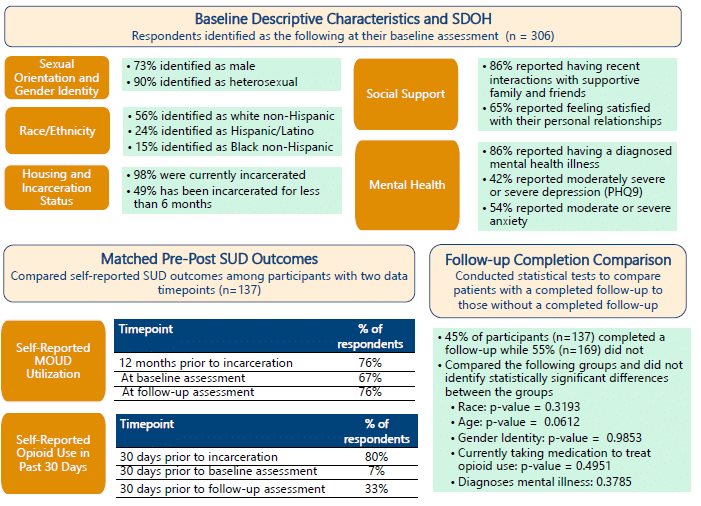
Exiting incarceration is a vulnerable time for people with a history of OUD. RISE participants with matched pre-post data were able to maintain their MOUD utilization and saw lower opioid use compared to their pre incarceration. Further, we saw no differences in follow-up rates when comparing participants with different demographics, mental health statuses and MOUD utilization. These findings suggest that the BHCHP RISE program is effectively engaging patients in MOUD and associated services during a crucial period post-incarceration.